
What a chimney liner does, and when an old NJ house needs one
Relining is the repair people are most suspicious of, because it is invisible and it is not cheap. It is also the one that most often turns an unusable old chimney back into a working one.
The short answer
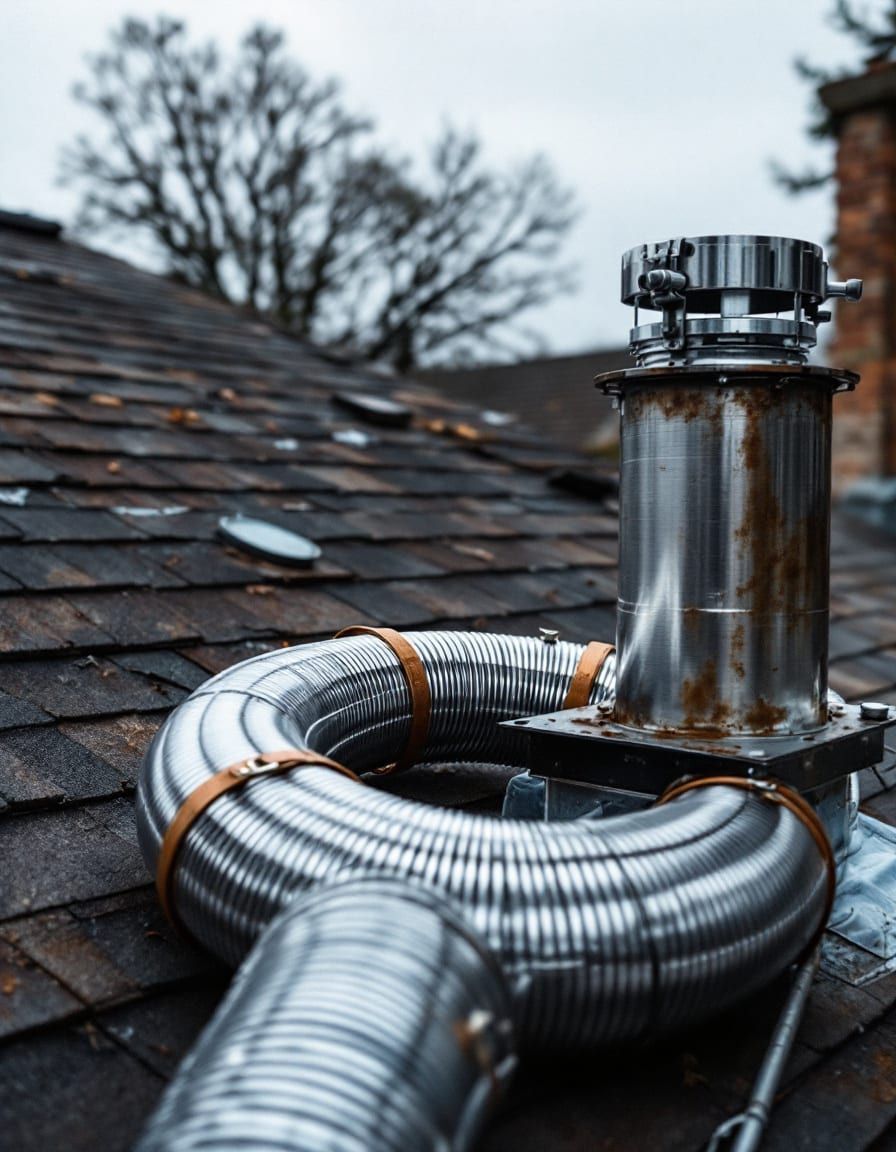
A liner is what keeps heat and combustion gases inside the flue and off the masonry and timber around it. Most older New Jersey chimneys are lined with clay tile, and clay tile fails in two ways: individual tiles crack, and the mortar joints between them wash out. Either lets heat and gas into the structure. The other case, extremely common in this housing, is a chimney that is structurally fine but far too LARGE for what now vents into it, because the boiler was converted from oil to gas and nobody resized the flue — so the gases cool, condense, and the acidic condensate attacks the chimney from the inside. A correctly sized stainless liner fixes both, and it is often the single repair that makes an old chimney properly usable again.
What the liner is actually for
Two jobs. The first is containment: combustion gases are hot, acidic and, in the case of a blocked or badly drawing appliance, poisonous, and the liner is what keeps them inside the flue instead of in the wall cavity or the bedroom. The second is draw: a flue sized correctly for its appliance moves gases out reliably, and one that is not either struggles to draw at all or lets them cool so much on the way that they condense before they reach the top. Most people think of a liner as protecting the chimney. It is at least as much about protecting the house around it.
How clay tile fails
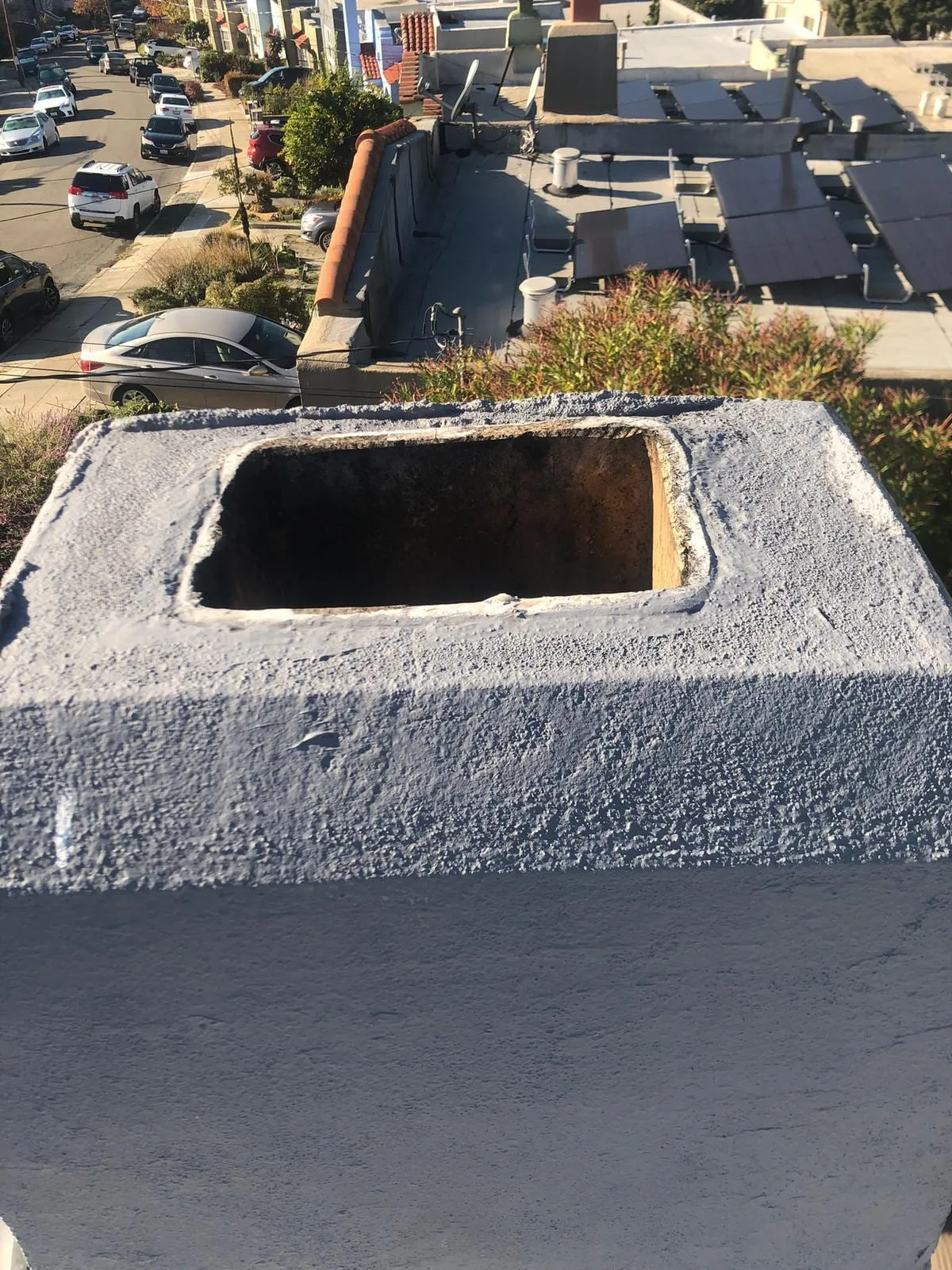
Clay tile is what most pre-1980 New Jersey chimneys have, and it is durable until it is not. Individual tiles crack, usually from thermal shock — a chimney fire is the classic cause, but so is a very hot fire in a flue that has been cold and damp for months. Separately, the mortar joints between tiles wash out over decades, particularly where water has been getting in at the crown. Either failure produces the same result: a path for heat and gas into the surrounding masonry. Neither is visible from the firebox or from the top, which is why a Level 2 camera scan is the only honest way to establish the condition of a clay liner.
The oil-to-gas problem, which is not about damage at all
This is the case most homeowners have never heard of and a great many of them have. When a house switches from an oil boiler to a modern gas appliance, the appliance needs a much smaller flue than the old one. Nobody changes the chimney, because the chimney is not what was replaced. The result is a flue several sizes too large: the gases spread out, cool below their dew point before they reach the top, and condense. Gas condensate is acidic, and it works on the liner and the masonry from the inside, continuously, without producing anything a homeowner would ever notice. A stainless liner sized to the appliance is the fix, and it also restores the draw.
- The appliance was replaced, the flue was not, so it is now several sizes too large
- The gases cool below their dew point before the top and condense
- Gas condensate is acidic and attacks liner and masonry from inside
- A stainless liner sized to the appliance restores both containment and draw
When relining is the answer and when it is not
Relining is the answer when the camera shows cracked tiles, washed-out joints, a separated liner, or condensate damage from an oversized flue. It is not the answer to a dirty chimney, a smoky fireplace caused by an unparged smoke chamber, or a leak coming in at the crown — all three of which are sometimes quoted as relining jobs by people who did not look. The way to tell the difference is the scan, and the way to tell whether the scan was honest is whether you were shown the frame that justifies the recommendation. Ask for it. Anybody proposing a liner should be able to show you exactly why.
What the work involves
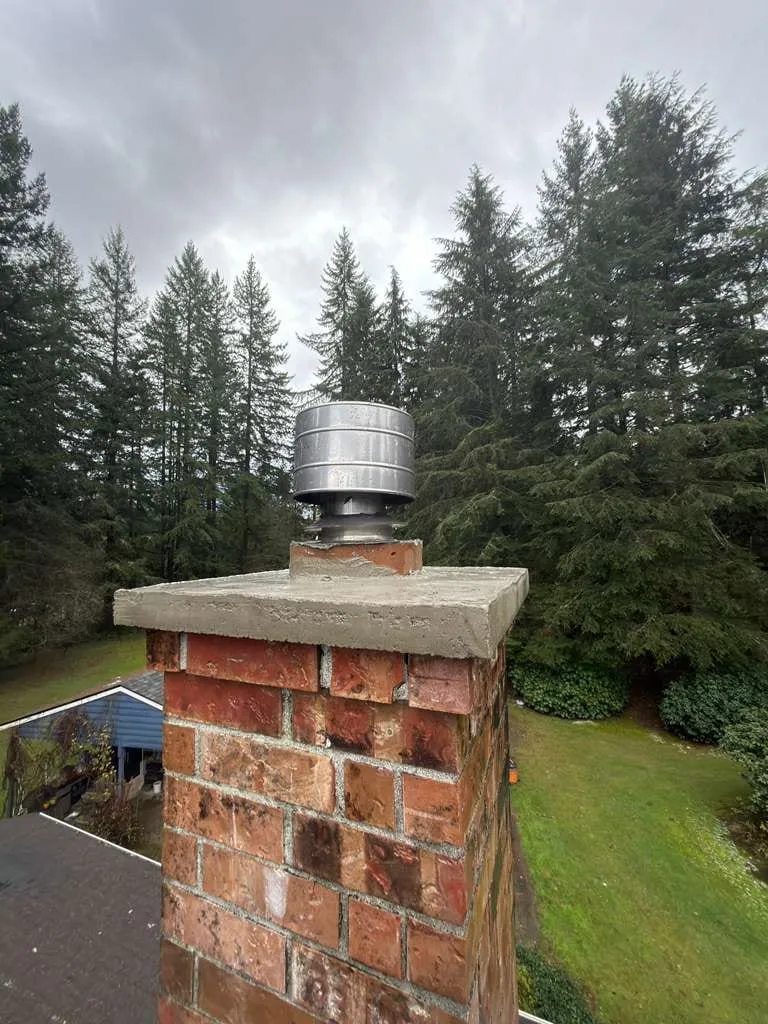
A stainless liner is fed down the flue from the top, sized to the appliance rather than to the opening, insulated where the installation calls for it, and terminated with a top plate and a cap at the crown. It is roof work rather than living-room work, which surprises people. The old clay tile generally stays where it is; the stainless liner runs inside it. Done properly it is a repair with a very long life, and it is the reason a chimney built in 1930 for coal can safely serve a gas boiler installed in 2026.
Related questions
Does every old chimney need relining?
No, and anybody who says otherwise has not scanned it. Plenty of clay-lined chimneys are in good condition and correctly sized for what they serve. The scan is what separates the ones that need it from the ones that do not.
Can I reline it myself?
It is roof work involving sizing calculations, insulation decisions and a correctly made termination, and getting the size wrong makes the draw worse rather than better. It is not a sensible do-it-yourself job.
How long does a stainless liner last?
A properly specified and installed one has a very long service life, which is much of why it is the standard answer to a failed clay liner rather than rebuilding the flue.
Want somebody to actually look at it?
Everything above is how this kind of work usually goes. What it is not is an assessment of your chimney, because nobody has seen your chimney.
The service this is about
Chimney repair
The stain on the ceiling is never where the leak is. Water travels, and a chimney gives it four separate ways in.
Read moreChimney inspection
Most people book an inspection because a house is being sold, or because something has already gone wrong. Both are good reasons. So is the first cold week of the year.
Read more