

Friendly. Professional. Informative. Effective. Efficient.Cleared my flue effectively and without mess or drama.
The stain on the ceiling is never where the leak is. Water travels, and a chimney gives it four separate ways in.
5.0from 59 Google reviews19 towns · open 7:00 AM–9:00 PM
The short answer
Almost every chimney repair in New Jersey starts as a water problem. There are four places water gets into a chimney — the crown, the cap, the flashing where the stack meets the roof, and the masonry face itself — and telling them apart is most of the job. A failed crown drops water straight down the outside of the liner. A missing or rusted cap lets rain fall into the flue. Failed flashing runs water into the roof deck and shows up as a ceiling stain a few feet from the chimney. Saturated brick wicks water through the wall, and then freeze-thaw does the rest. We work on all four across 19 New Jersey towns, and we find out which one it is before anybody talks about a repair.
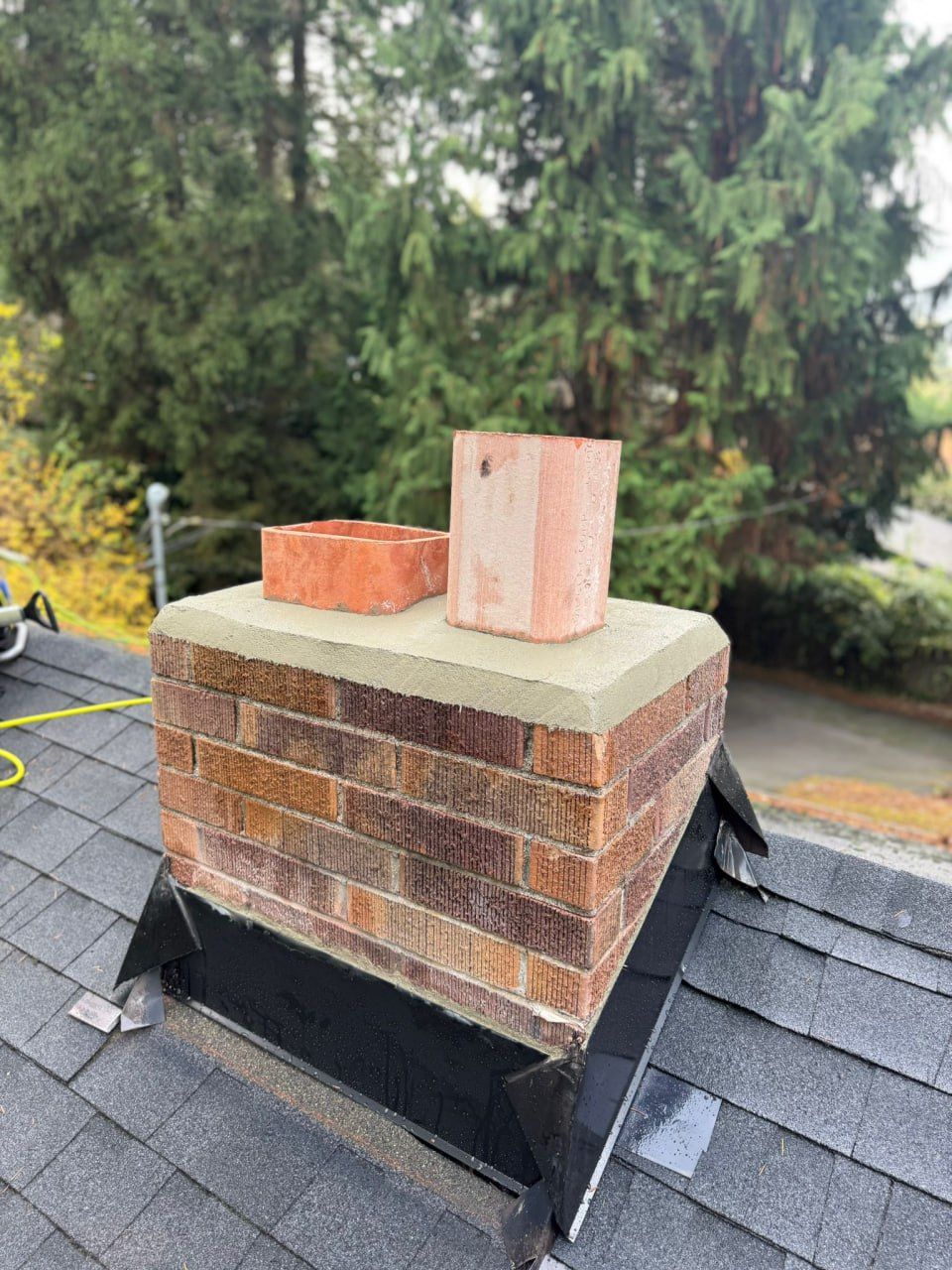
The crown is the slab on top of the chimney that sheds water away from the flue. On a lot of North Jersey housing stock it was poured thin, flush with the brick, with no drip edge — which means water runs straight off it down the face of the stack instead of dripping clear. Then thirty winters of freeze-thaw open hairline cracks in it, and from that point every rainstorm puts water into the top of the masonry. A cracked crown is cheap to seal early and expensive to ignore, because the water it lets in runs down between the liner and the brick where nobody can see it until the face starts spalling.
Sealant buys a season or two. Counter flashing cut properly into the mortar joint lasts decades.
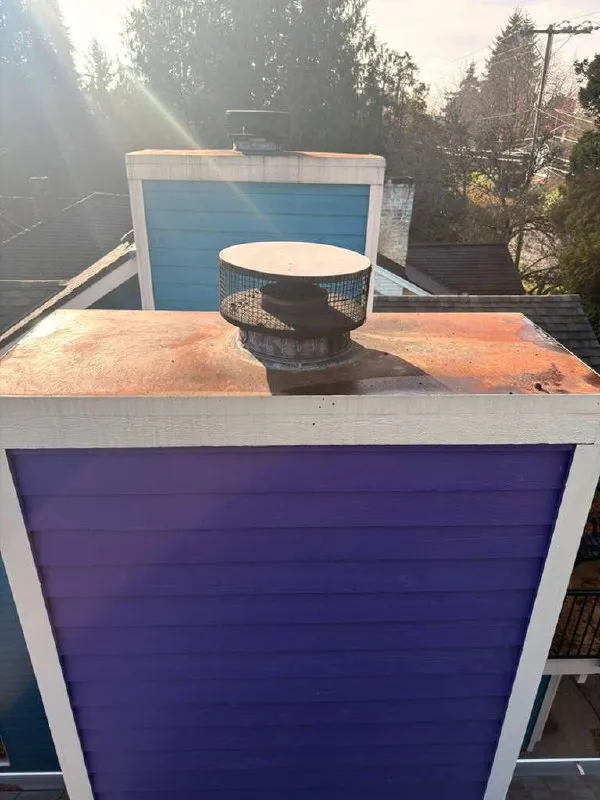
A cap keeps rain, snow and animals out of the flue, and stops downdraft pushing smoke back into the room. The ones that fail are the ones held on by friction alone — a nor'easter lifts them, and the next thing in the flue is water. On exposed roofs, and much of Hudson and Monmouth County is exposed, a locking cap is worth the difference. We fit caps sized to the flue rather than to the nearest stock size, because an undersized cap restricts draw and an oversized one does not seal.
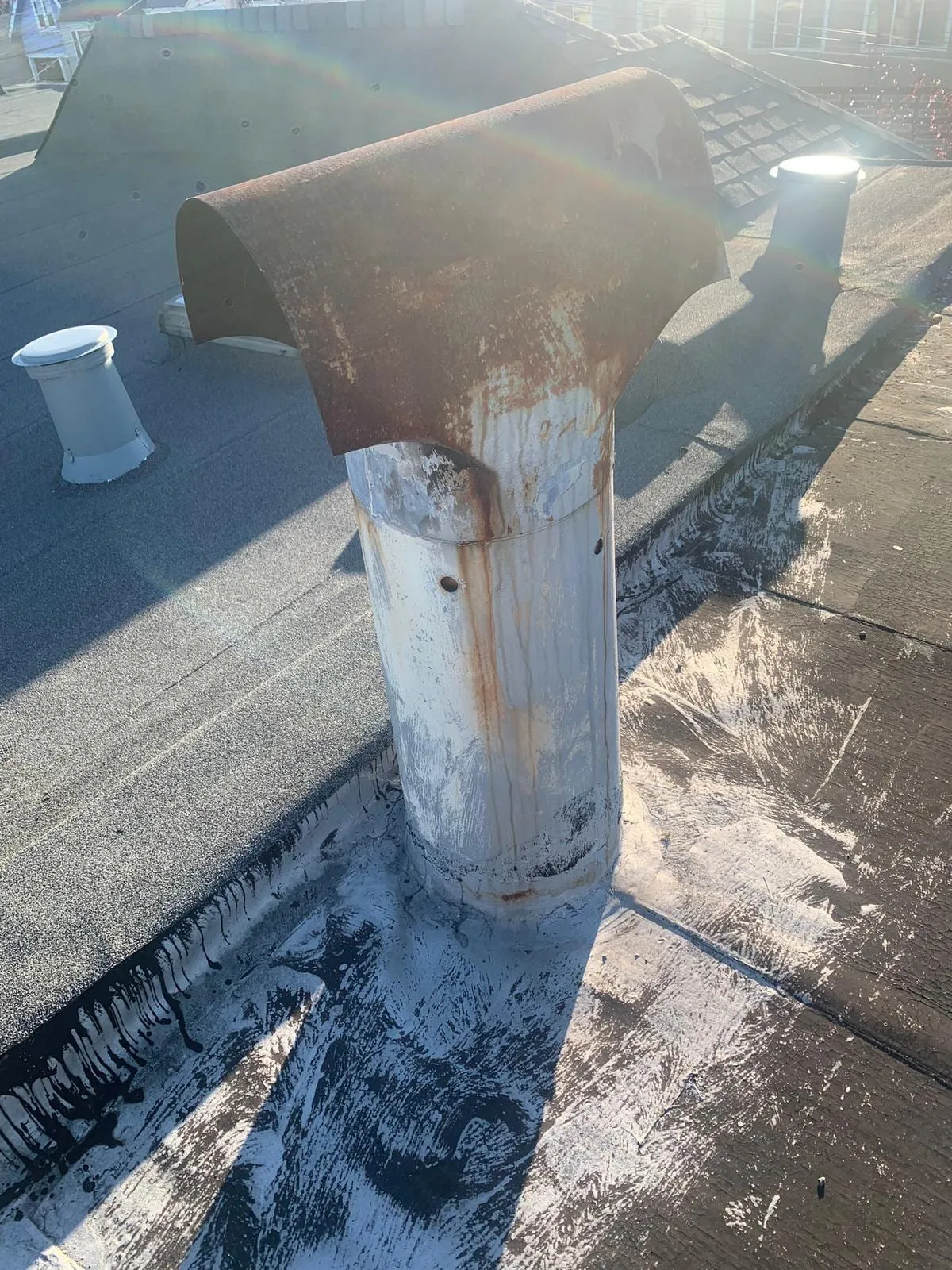
Where the chimney passes through the roof there are two pieces of metal doing the work: base flashing that turns up the masonry, and counter flashing cut into a mortar joint and folded down over it. When somebody has "fixed" a chimney leak with a tube of roof sealant, this is almost always what they sealed, and it is why it came back. Sealant buys a season or two; counter flashing cut properly into the joint lasts decades. The tell is a ceiling stain a foot or two away from the chimney breast rather than on it, because the water is running down the roof deck before it drops.
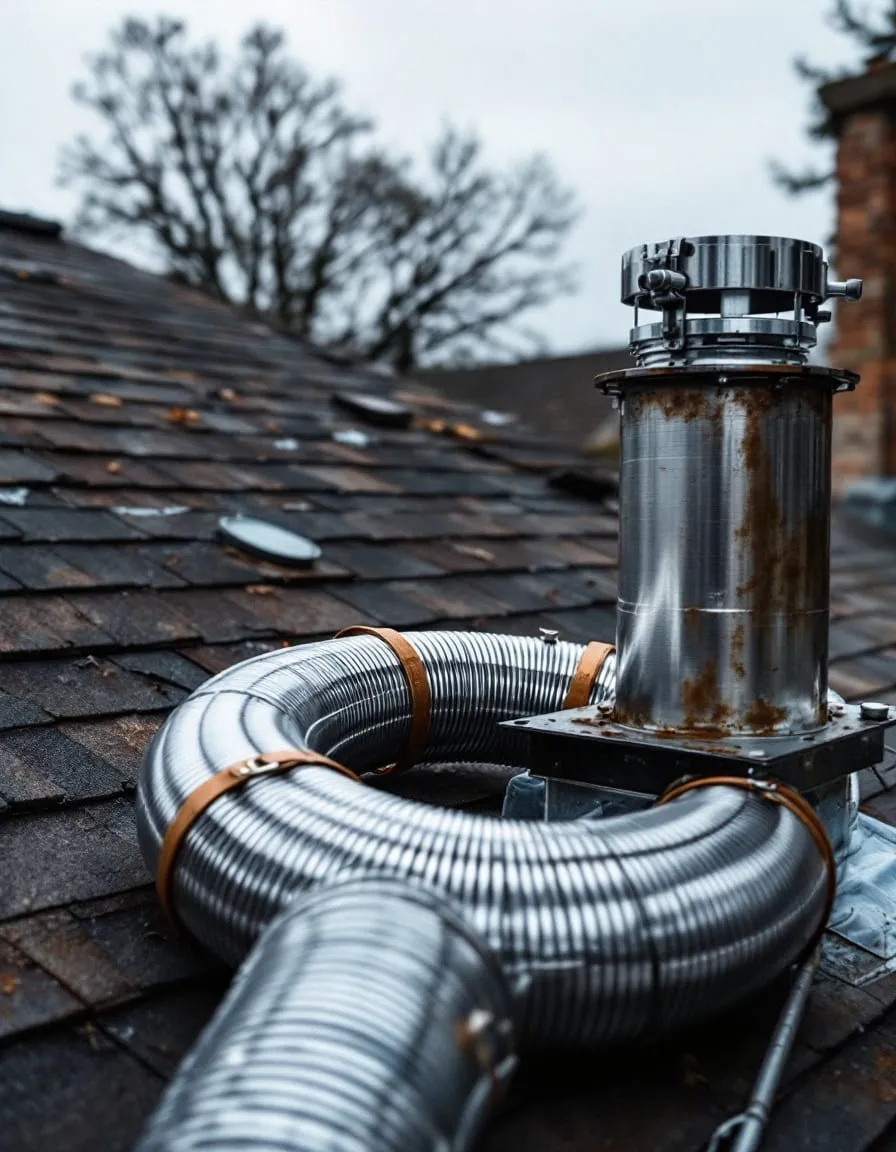
A liner keeps combustion gases inside the flue and off the surrounding structure. Clay tile is what most older North Jersey chimneys have, and it fails in two ways: individual tiles crack, and the mortar joints between them wash out. Either one lets heat and gas into the masonry. The other common case here is a house converted from an oil boiler to gas, where the old flue is now far larger than the new appliance needs. The gases cool before they reach the top, condense, and the acidic condensate eats the chimney from the inside. A correctly sized stainless liner fixes both, and it is often the single repair that makes an old chimney usable again.
New Jersey gets the full freeze-thaw cycle: water gets into the mortar, freezes, expands, and opens the joint a little more each winter. Caught early that is repointing. Left long enough, the brick face itself starts spalling, and at that point repointing is putting good mortar around bad brick. We will tell you which side of that line a chimney is on, and if it needs rebuilding from the roof line up we will say so rather than sell you two repairs.
From their own jobs
The same chimney before — a corroded cap and a crown stained where water had been sitting
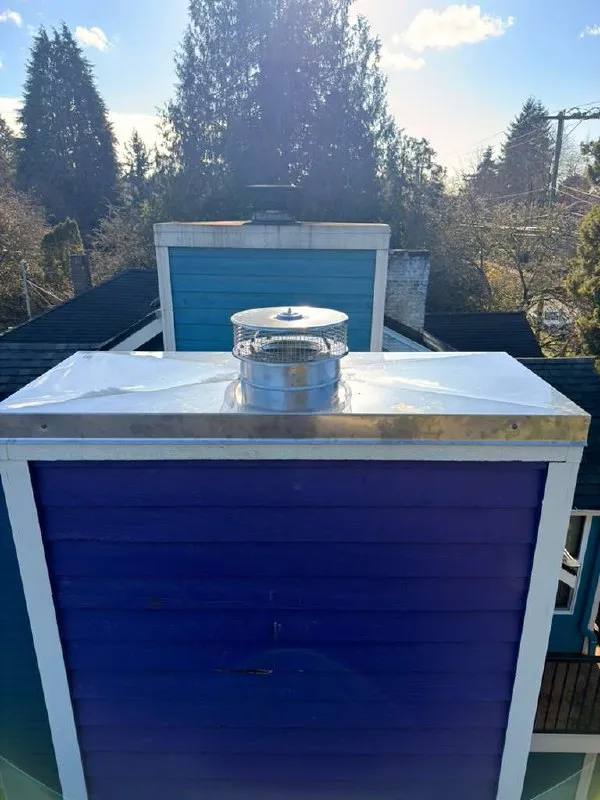
And after — a new crown cover and a stainless cap sized to the flue
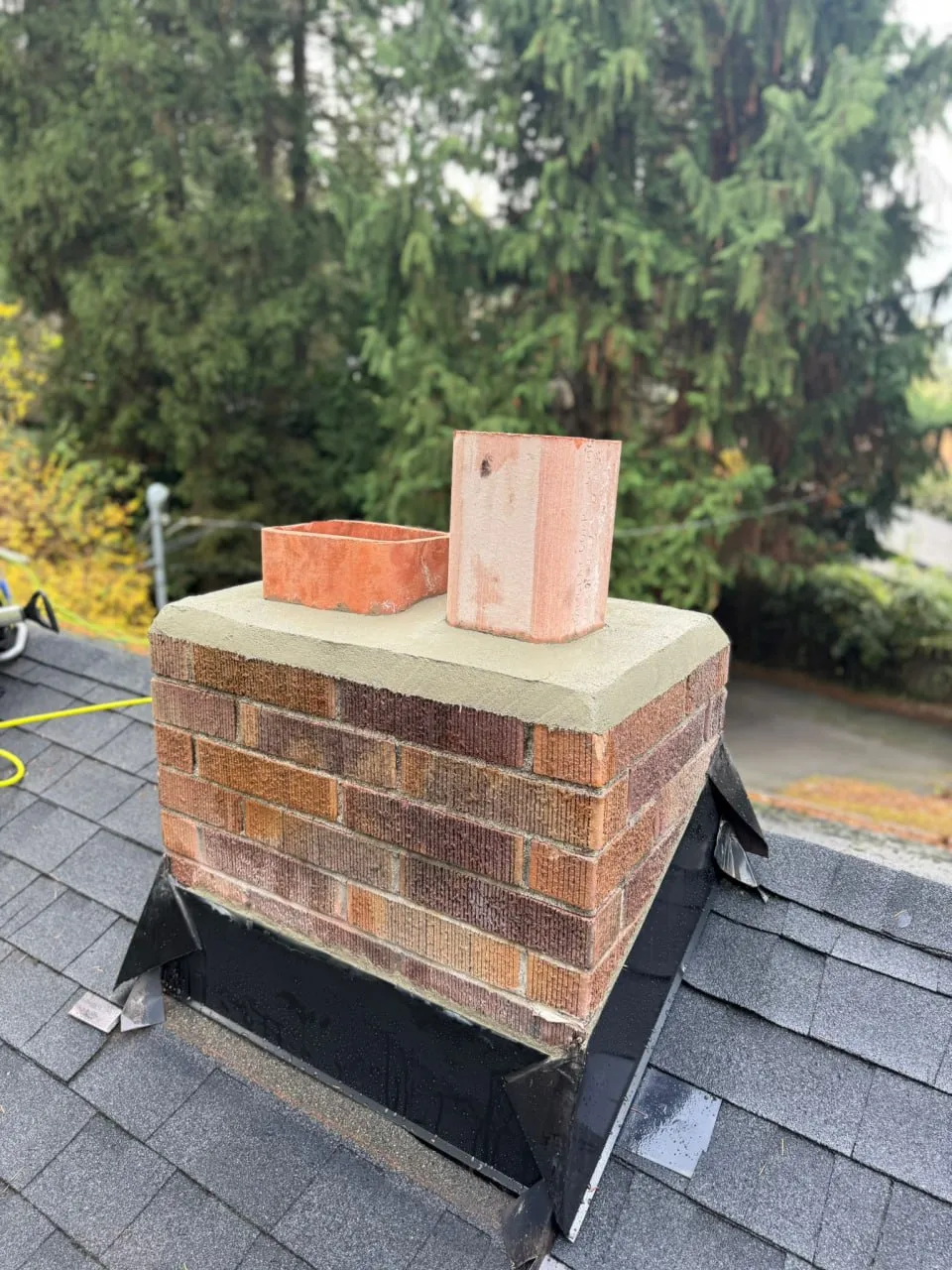
A crown poured that morning, still green, with both clay liners set through it
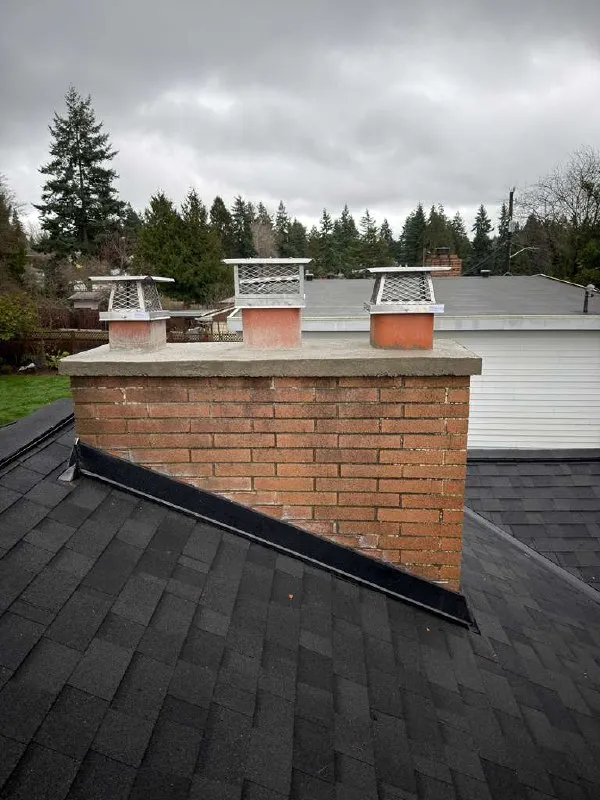
Three caps on one wide crown, each sized to its own flue
5.0
59 reviews on Google
Read on
Google publishes 59; we counted the 60 the listing returned.
Friendly. Professional. Informative. Effective. Efficient.Cleared my flue effectively and without mess or drama.

There was a lot of shaking in the chimney at night because the cap had come loose. They took it out and replaced it with a safe locking model, fixed the broken tile below, cleaned up the mess, and checked the…

The formation of water stains around the fireplace was prevented by repairing the flashing. The sealing seems to be well-done and secure. At last, weatherproofing feels solid. Thorough focus on detail.
You usually cannot tell from inside the house, which is why we look at all four before quoting anything. The pattern of the stain narrows it down — on the breast points at crown or masonry, a foot or two away points at flashing — but the roof settles it.
Cap and flashing work, usually yes. Crown work and repointing need temperatures that let the material cure, so mid-winter is often the wrong time to start them in New Jersey — and a temporary cover through to spring is a legitimate answer rather than a fudge.
Treat it as urgent. A visible lean, a step crack running through several courses, or brick that has moved out of line are structural rather than cosmetic. Stop using the fireplace and call.
Both, and we will tell you which one the chimney needs. Repointing a stack whose brick face has already spalled is money spent on the wrong problem.
Often yes. That smell is creosote plus moisture, and it usually means water is getting in at the crown or the cap. A sweep helps, but it comes back every humid week until the water is stopped.
Creosote does not announce itself. It builds in the dark, a little every fire, and the first sign most people get is smoke coming back into the room on the coldest night of the year.
Read moreMost people book an inspection because a house is being sold, or because something has already gone wrong. Both are good reasons. So is the first cold week of the year.
Read moreA chimney can be spotless and the fireplace still refuse to work. When that happens, the problem is almost always at the bottom.
Read more