

Friendly. Professional. Informative. Effective. Efficient.Cleared my flue effectively and without mess or drama.
You empty the lint trap every load. The trap is not the problem. The problem is the twenty-five feet of duct behind it, which is not built to be opened by the person using the machine.
5.0from 59 Google reviews19 towns · open 7:00 AM–9:00 PM
The short answer
Dryer vent cleaning clears the duct that runs from the back of the dryer to the outside of the house — not the lint trap, which you already empty, but the run behind the wall, which you cannot reach. It matters because clothes dryers cause roughly 2,900 residential fires a year in the United States, and the US Fire Administration names failure to clean as the leading cause. The everyday symptom is far less dramatic: clothes that come out damp, a cycle that has to be run twice, a laundry room that gets hot, and an energy bill that has crept up. We clear the whole run across 19 New Jersey towns, and we show you what came out of the wall before we leave.
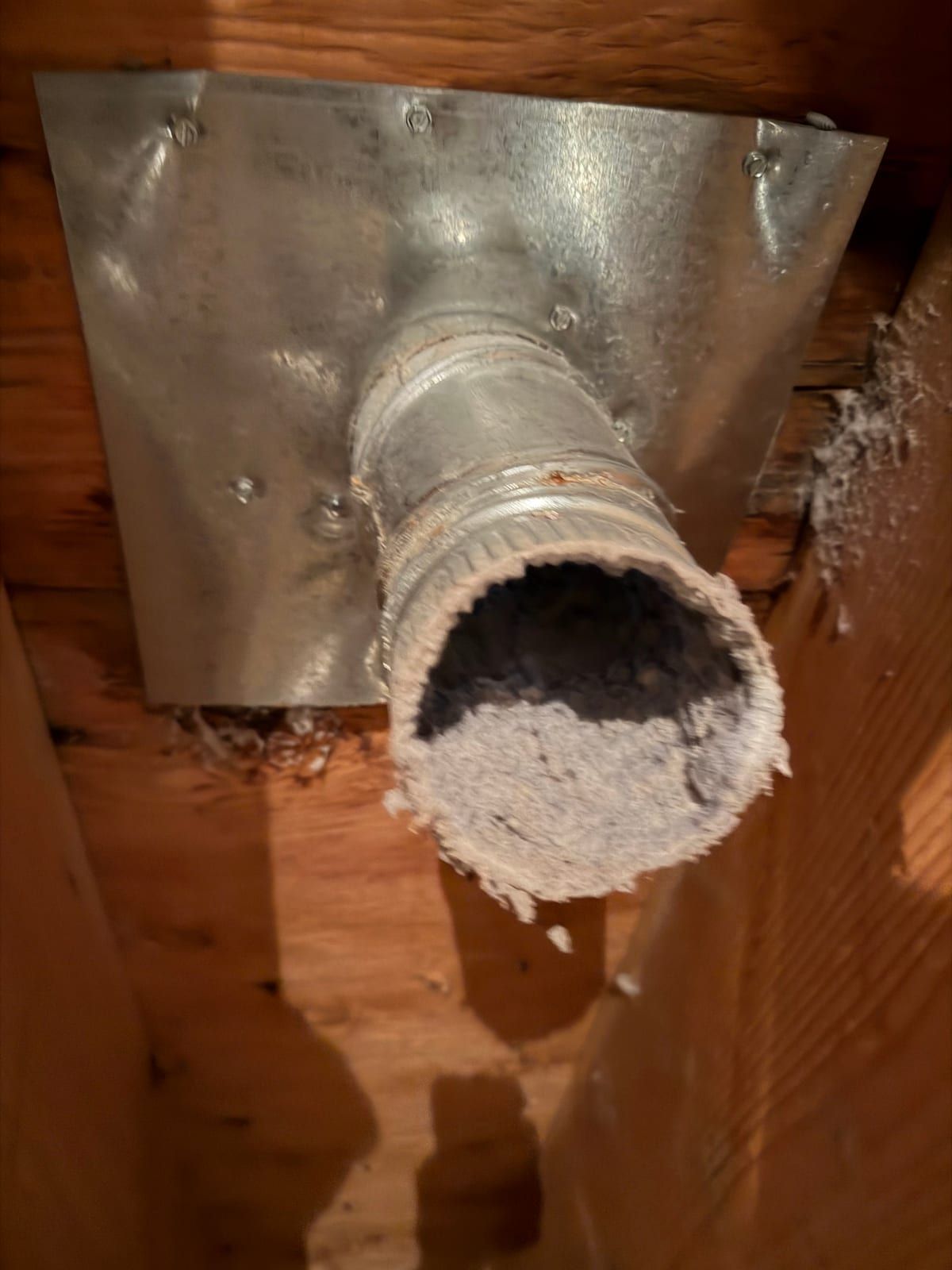
A lint trap catches most of what comes off a load, but not all of it. What escapes goes into the duct, and it settles wherever the air slows down — at every elbow, at every joint, and along any section of flexible foil that has been crushed behind the machine. Over a few years that builds into a lining, and then into a plug. The airflow drops, the dryer runs longer to shift the same moisture, the thermostat cycles more often, and the appliance runs hotter than it was designed to. That is the mechanism behind both the energy cost and the fire risk, and it is why the trap being clean tells you nothing about the duct.
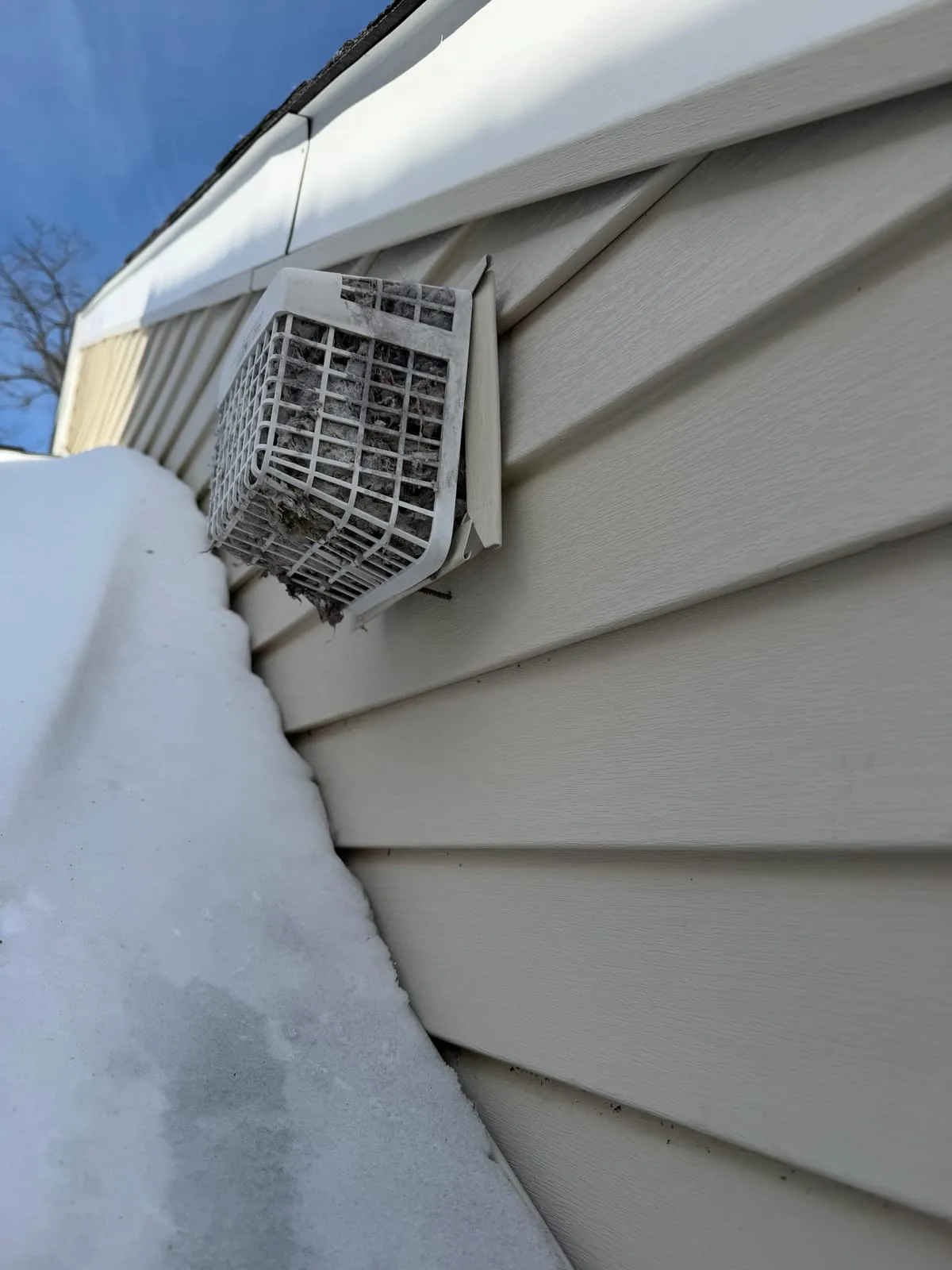
Every elbow in the run is somewhere lint stops moving. Count the elbows and you can predict the job before anybody opens anything.
The worst runs in North Jersey are the long ones, and they are common in two very different kinds of building. In post-war ranches and split-levels the laundry often sits in the middle of the basement, so the duct travels a long way across the ceiling joists with several elbows before it reaches an exterior wall. In converted row houses and brownstones in Jersey City, Hoboken and Union City, the laundry is frequently in a closet on an interior wall and the duct goes up rather than out. Both add resistance, and every elbow is a place lint stops moving. The flexible foil accordion hose sold to connect a dryer to the wall makes it worse: it is fine as a short transition and it is a trap as a run.
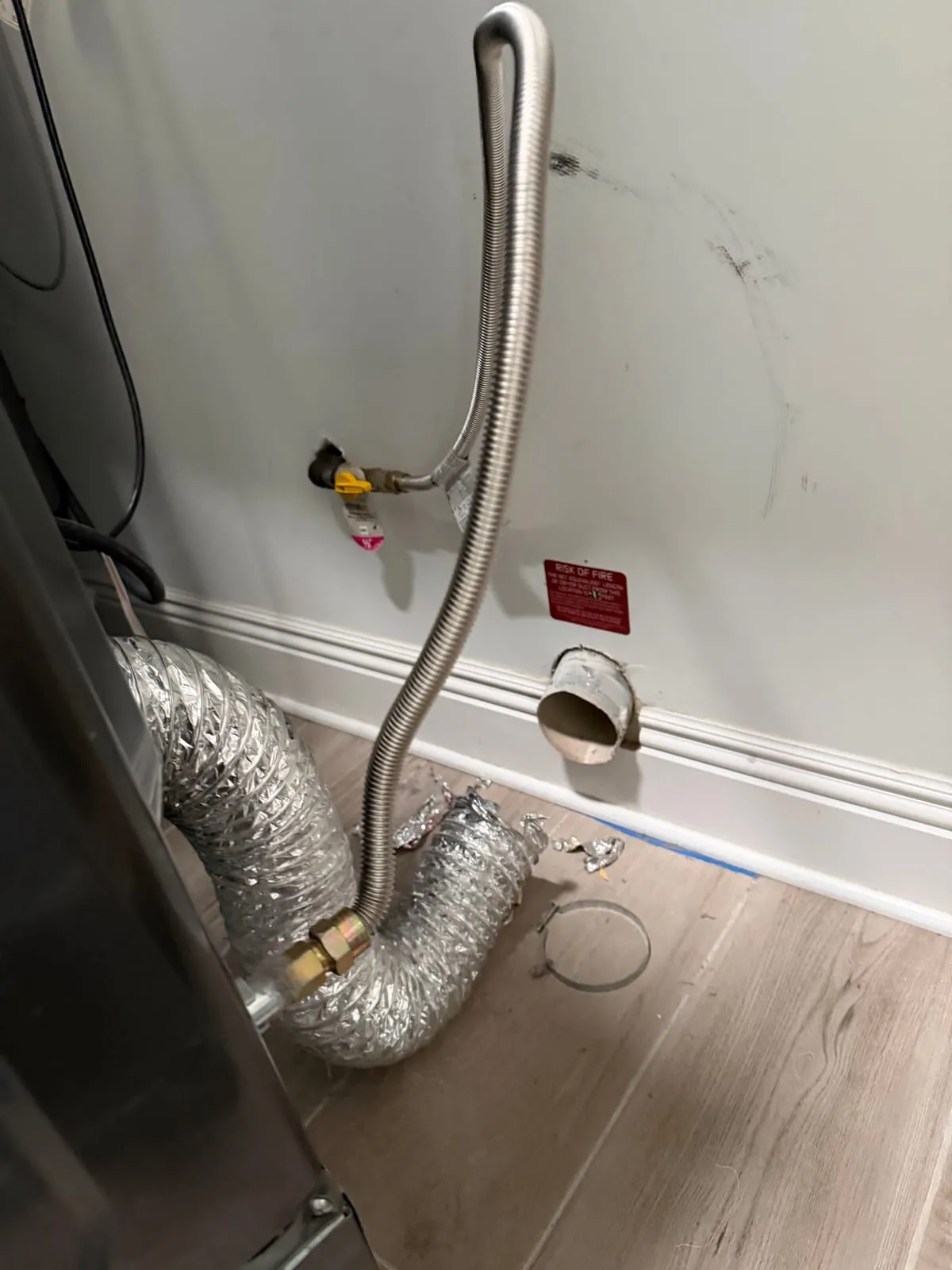
The hood on the outside wall has a flap that is supposed to open under air pressure and close when the dryer stops. When it stops opening fully — because the hinge has corroded, because lint has packed the housing, or because a bird has built in it — the duct backs up from the far end, and cleaning from the inside alone will not fix it. Checking and clearing the hood is part of the job, not an extra. It is also the reason we ask to see the outside wall as well as the laundry room.
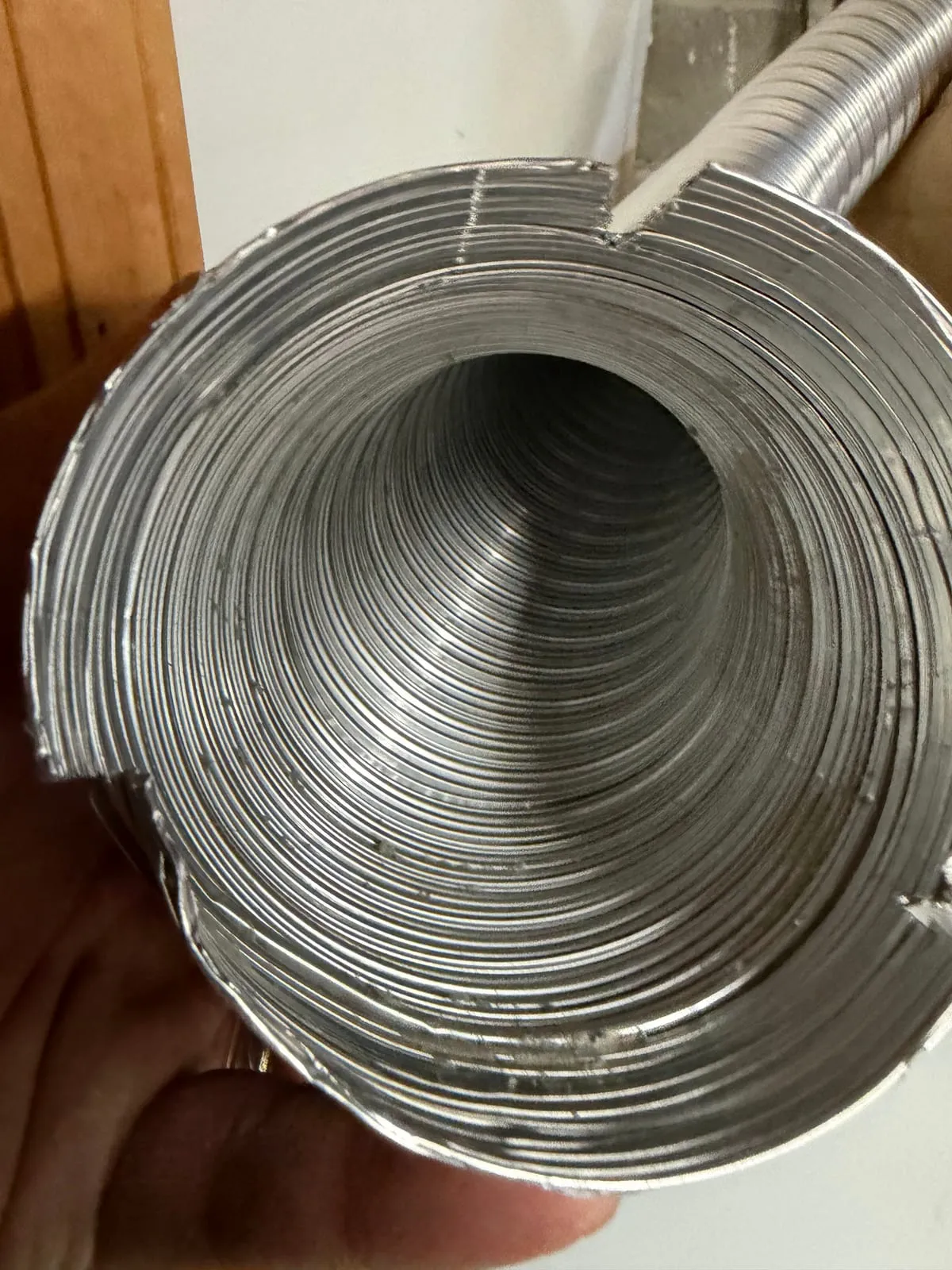
Sometimes the duct is not dirty, it is damaged: a flexible section crushed flat behind the machine, a joint that has come apart inside a ceiling, a run that was never connected to the outside at all and has been venting into a crawl space for years. Cleaning does not fix any of those, and we will say so with a photograph rather than clean it and hand it back. That work sits on the duct repair and replacement page, and there is no obligation to book it with us.
From their own jobs
Flexible hose behind the machine — fine as a short transition, a trap as a run
A length of duct pulled out, which is how a crushed section is found
The exterior hood, and whether its flap still opens under pressure
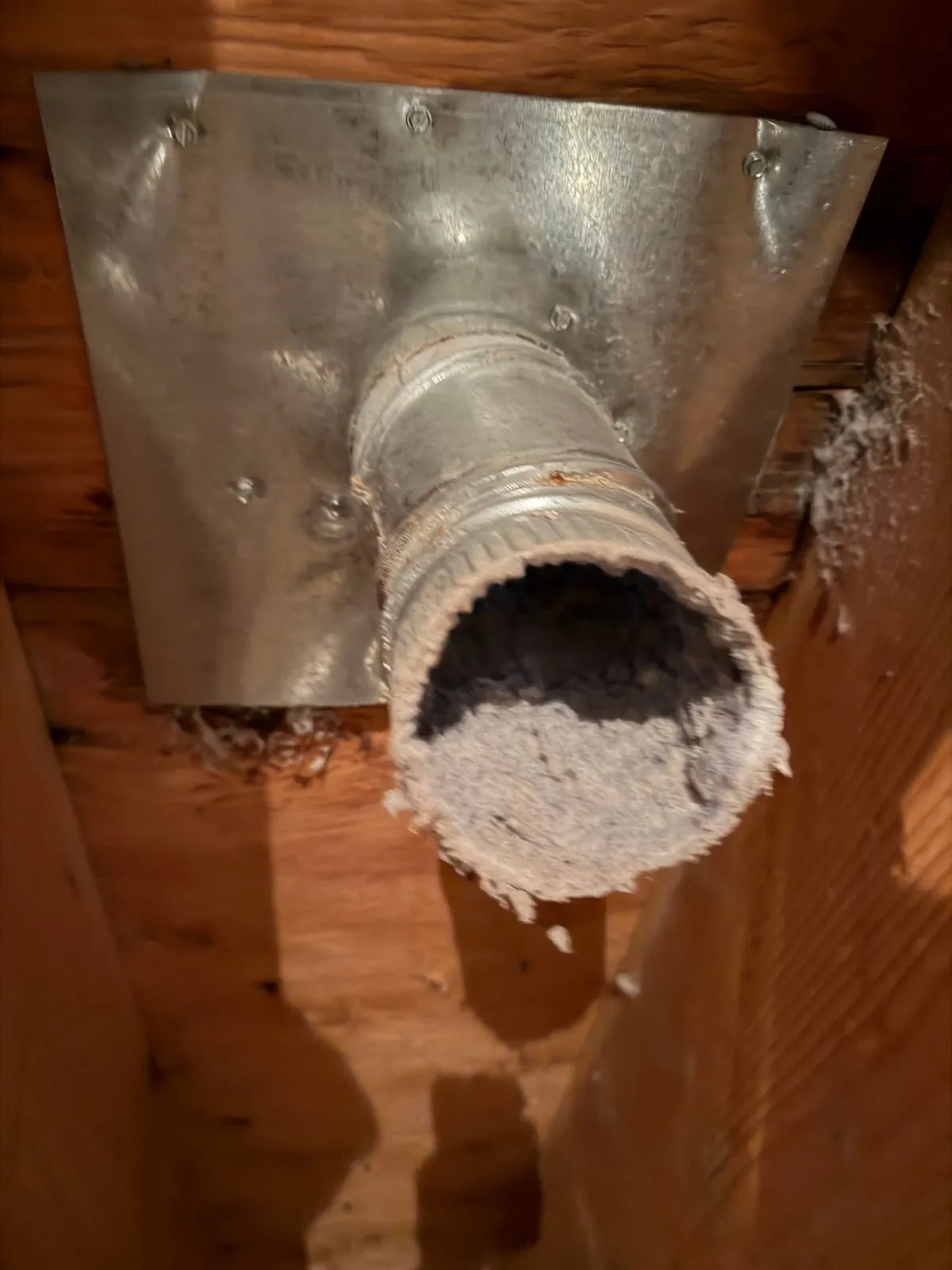
What comes out of the far end of a run that cannot be reached from the laundry room
5.0
59 reviews on Google
Read on
Google publishes 59; we counted the 60 the listing returned.
Friendly. Professional. Informative. Effective. Efficient.Cleared my flue effectively and without mess or drama.

There was a lot of shaking in the chimney at night because the cap had come loose. They took it out and replaced it with a safe locking model, fixed the broken tile below, cleaned up the mess, and checked the…

The formation of water stains around the fireplace was prevented by repairing the flashing. The sealing seems to be well-done and secure. At last, weatherproofing feels solid. Thorough focus on detail.
Once a year is the usual answer for a household running four or five loads a week. A long run with several elbows, a large family, or a house where the dryer already takes two cycles are all reasons to do it sooner.
For a short, straight run to an exterior wall, often yes. For a long run with elbows, or one that goes up through a ceiling, a consumer kit tends to push the plug further in rather than pull it out — and it cannot check the hood at the far end.
Run the dryer and go outside. If you cannot feel a strong flow of warm air at the hood, the run is restricted. Damp clothes after a full cycle and a hot laundry room point the same way.
Yes, though shared or vertical stack runs in a multi-unit building often need the managing agent's agreement first, because the duct is not entirely inside your unit. Call and we will tell you what is likely to be needed.
Yes, and we would rather you looked. You cannot see inside your own duct, so the lint is the only evidence there is that the job was done — which is exactly why some companies bag it up before you get there. It also tells you something useful: a full bag after twelve months means the run needs doing more often than once a year.
This is the one service in our list where the right answer is often "you do not need this". We would rather say it now than take the money.
Read moreSome ducts are dirty. Some are broken. And some were never connected to the outside of the building at all, which is the one nobody sees coming.
Read more