
Friendly. Professional. Informative. Effective. Efficient.Cleared my flue effectively and without mess or drama.
Most people book an inspection because a house is being sold, or because something has already gone wrong. Both are good reasons. So is the first cold week of the year.
5.0from 59 Google reviews19 towns · open 7:00 AM–9:00 PM
The short answer
A chimney inspection is a documented assessment of whether a flue is safe to use, and NFPA 211 defines three levels of it. A Level 1 covers everything readily accessible and visible: the firebox, the damper, the accessible portions of the flue, the exterior and the crown. A Level 2 adds a camera scan of the entire liner plus the parts of the structure you cannot see from either end, and the standard calls for it whenever the property changes hands, after a chimney fire, after a lightning strike, an earthquake or a severe storm, and whenever the appliance or the fuel changes. A Level 3 involves opening up structure and is rare. We do Level 1 and Level 2 across 19 New Jersey towns, and both end with the same thing: photographs and a written report, not a verbal "looks fine".
A Level 1 is the annual check. It assumes the chimney is in continued service under the same conditions as last year, and it looks at everything that can be reached and seen without opening anything up: the firebox and its joints, the damper and whether it seats, the accessible flue, the exterior masonry, the crown, the cap, the flashing. A Level 2 answers the question a Level 1 cannot — what does the whole liner look like, top to bottom. It is a camera scan, and it exists because the failures that matter most are invisible from both ends of the flue: a cracked clay tile, a gap at a joint, a liner that has separated from the smoke chamber. If you are buying a house in Bergen or Essex County with a fireplace you have never seen lit, a Level 1 is not the inspection you want.
The report is the thing you are buying. The visit is just how we get it.
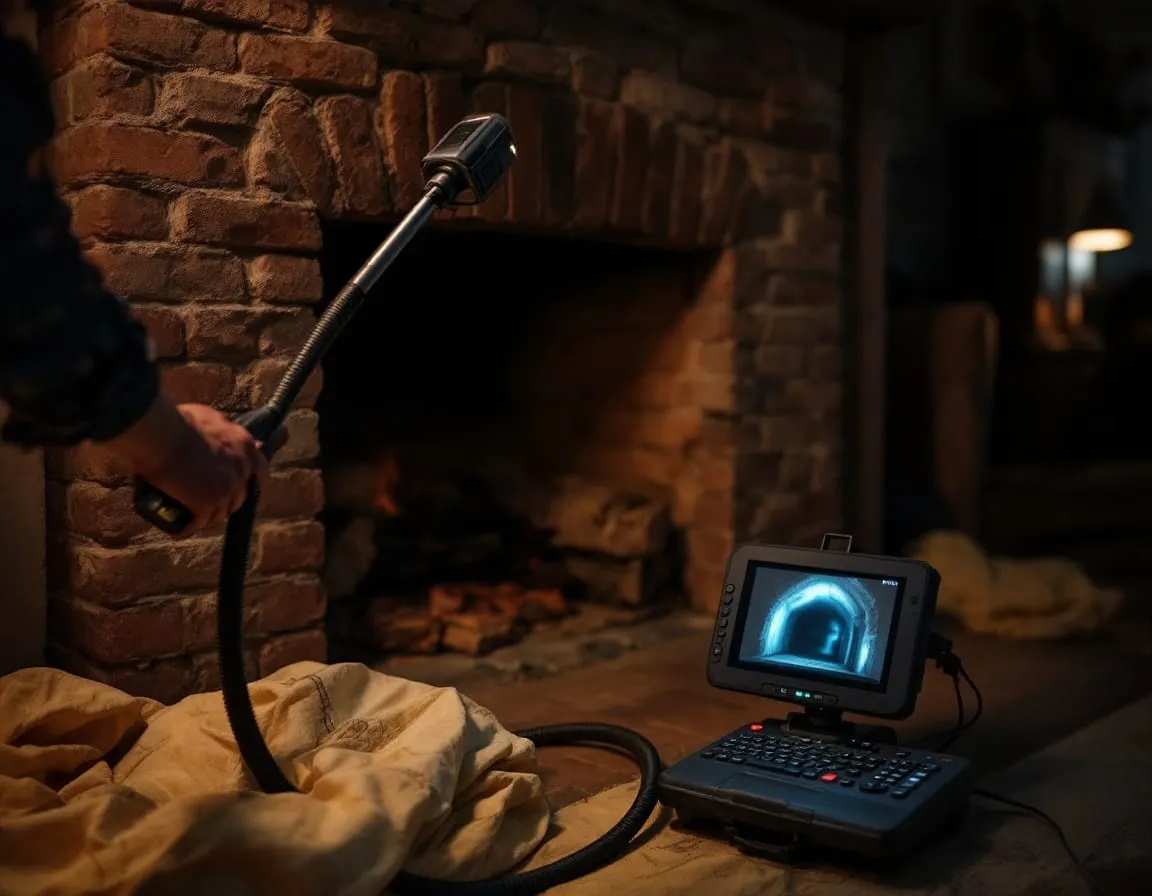
Pointing a light up a flue from the firebox tells you about the first few feet and nothing else. A scan tells you about the rest. The common findings on North Jersey masonry are a cracked or spalled clay tile a third of the way up, mortar joints between tiles that have washed out, a smoke chamber that was never parged and is still rough corbelled brick, and — on houses converted from oil to gas — a flue sized for a much larger appliance, where the gases now cool before they reach the top and condense on the way. None of those is visible from the hearth. All of them change what the chimney should be used for, and two of them change whether it should be used at all.
A report with photographs, written in the order somebody actually reads it: what is safe, what needs watching, what needs doing, and what it would mean to leave it. If the chimney is fine, the report says so and that is the whole document. If it is not, every finding has a frame attached to it, so nobody is being asked to take our word for a crack they never saw. If you are selling, that report is a document you can hand a buyer. If you are buying, it is one you can hand a seller.
There are a few signs that mean stop, not schedule. Smoke pushing back into the room once the fire is going. A sharp, acrid smell from the fireplace when it is not lit, especially in humid weather. A loud roaring from the chimney, or debris landing in the firebox during a fire — both can mean a chimney fire is happening or has already happened. Visible cracks in the firebox brick, or daylight where there should not be any. If any of those describe your chimney, do not light it again until somebody has looked. Call and we will tell you honestly whether it can wait for an appointment.
From their own jobs
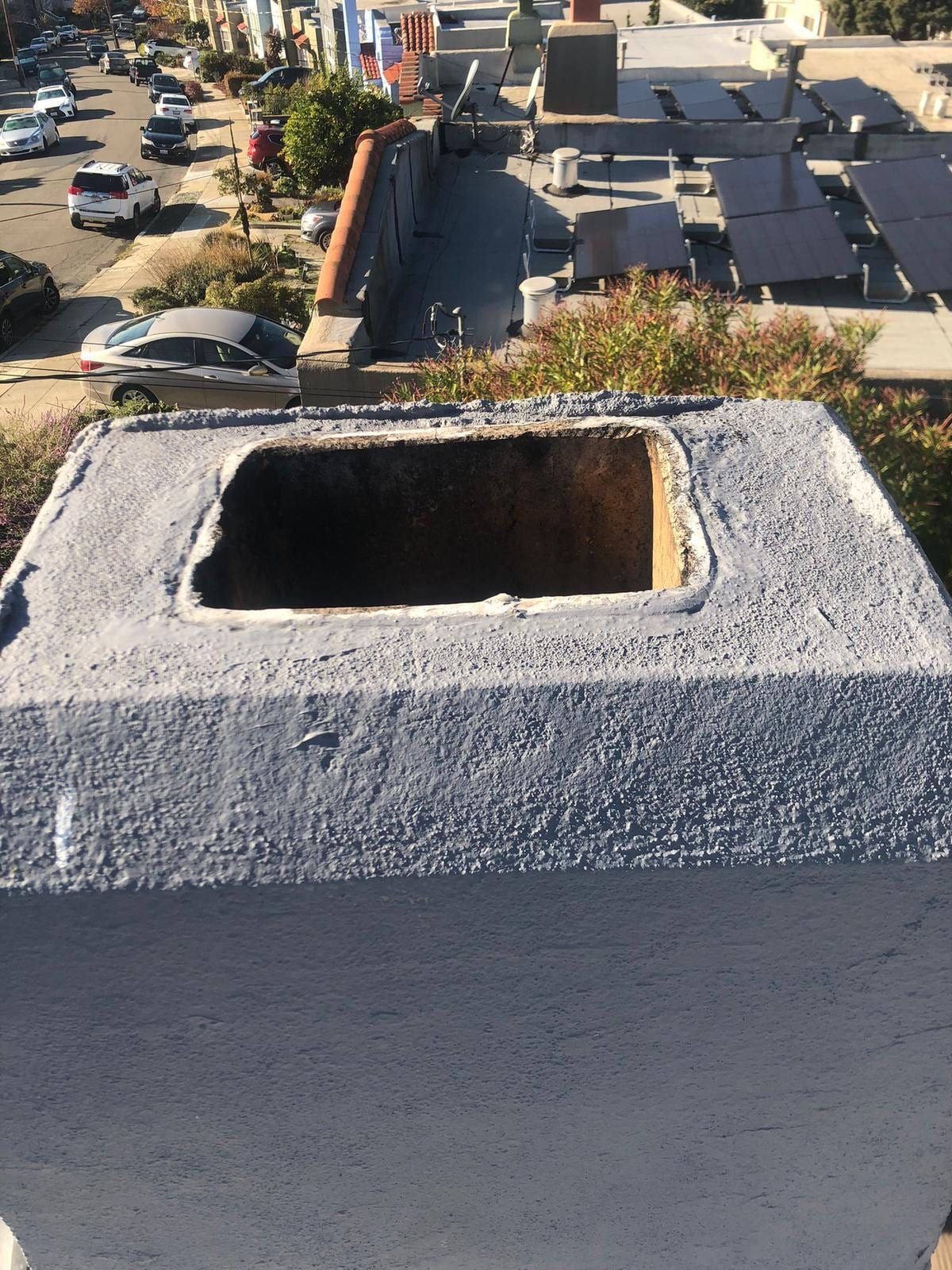
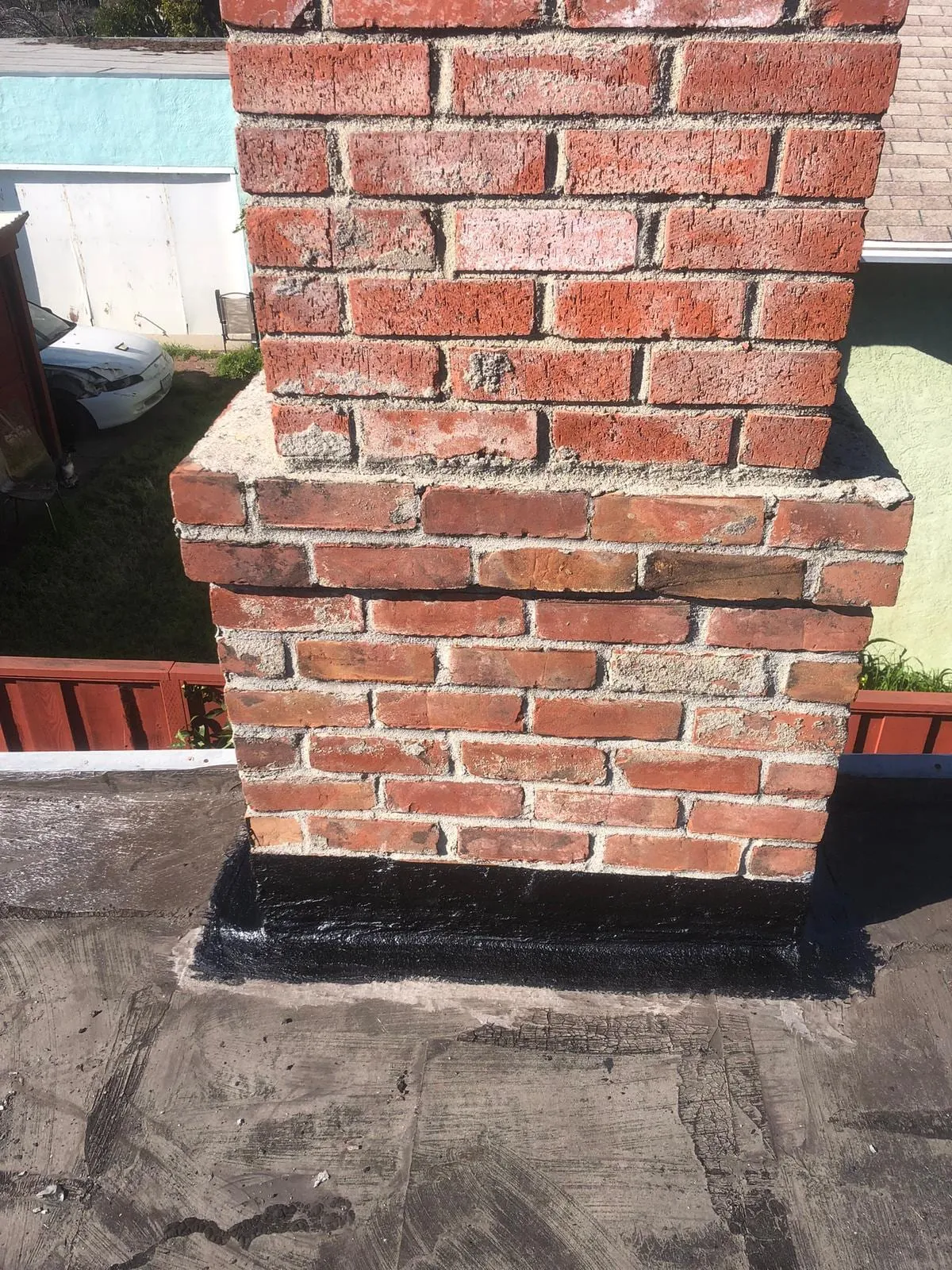
A stack that passed — repointed, flashed, and shedding water properly
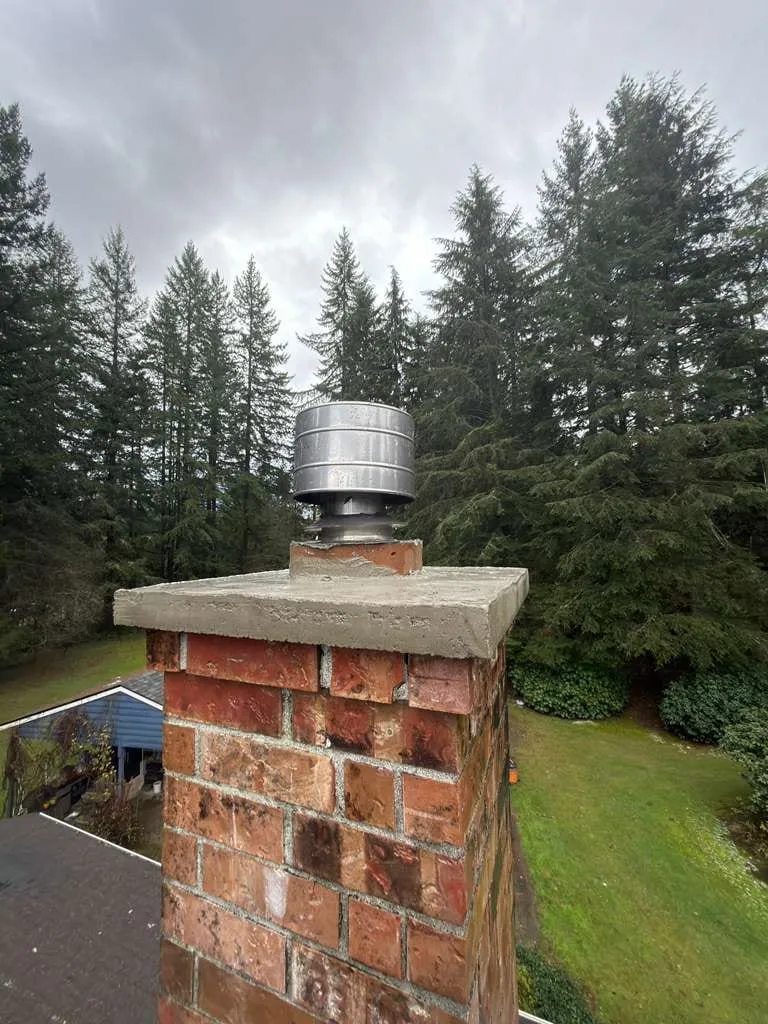
A new stainless cap, which is what a failed inspection often ends in
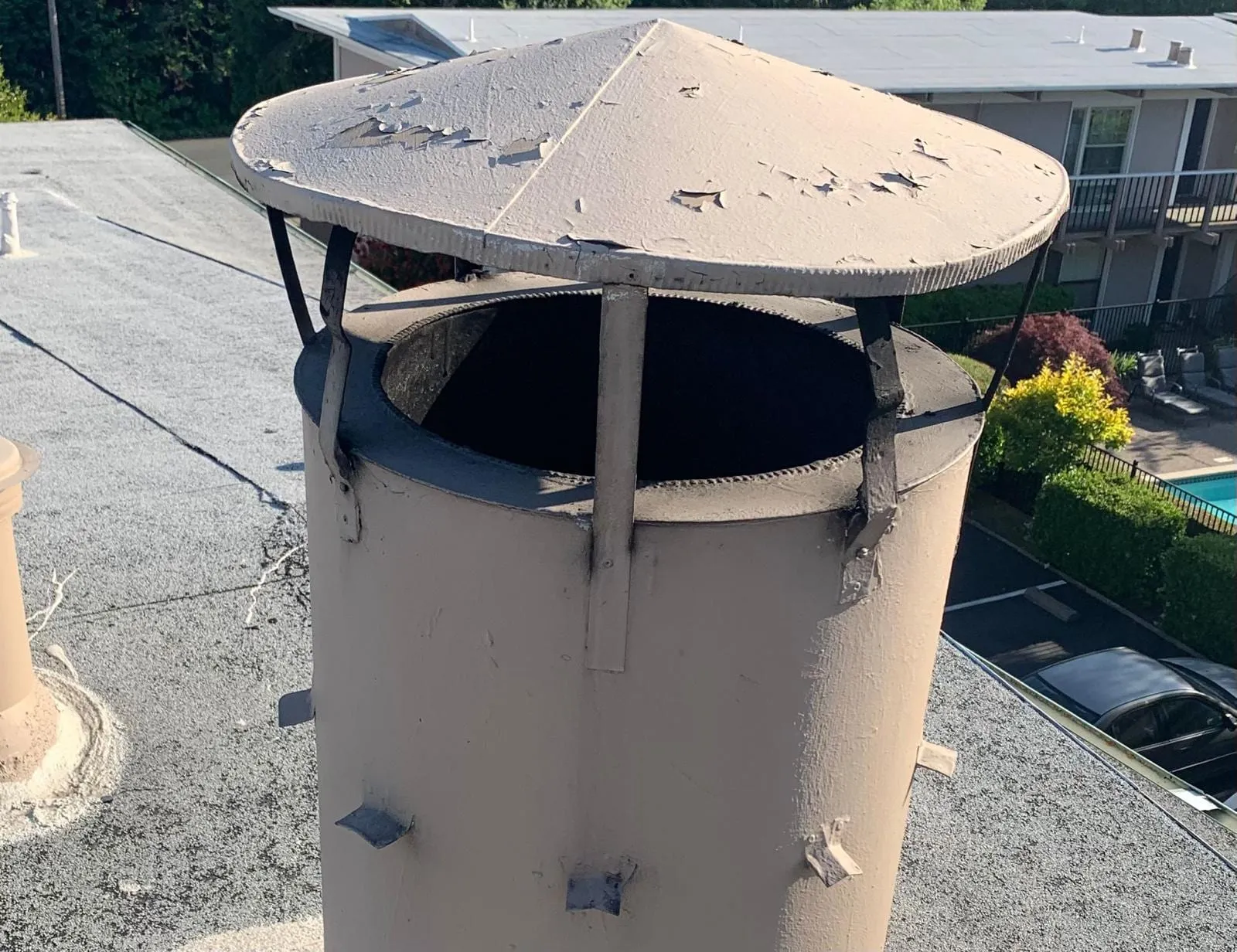
A flat-roof cap and housing, checked from above on every visit
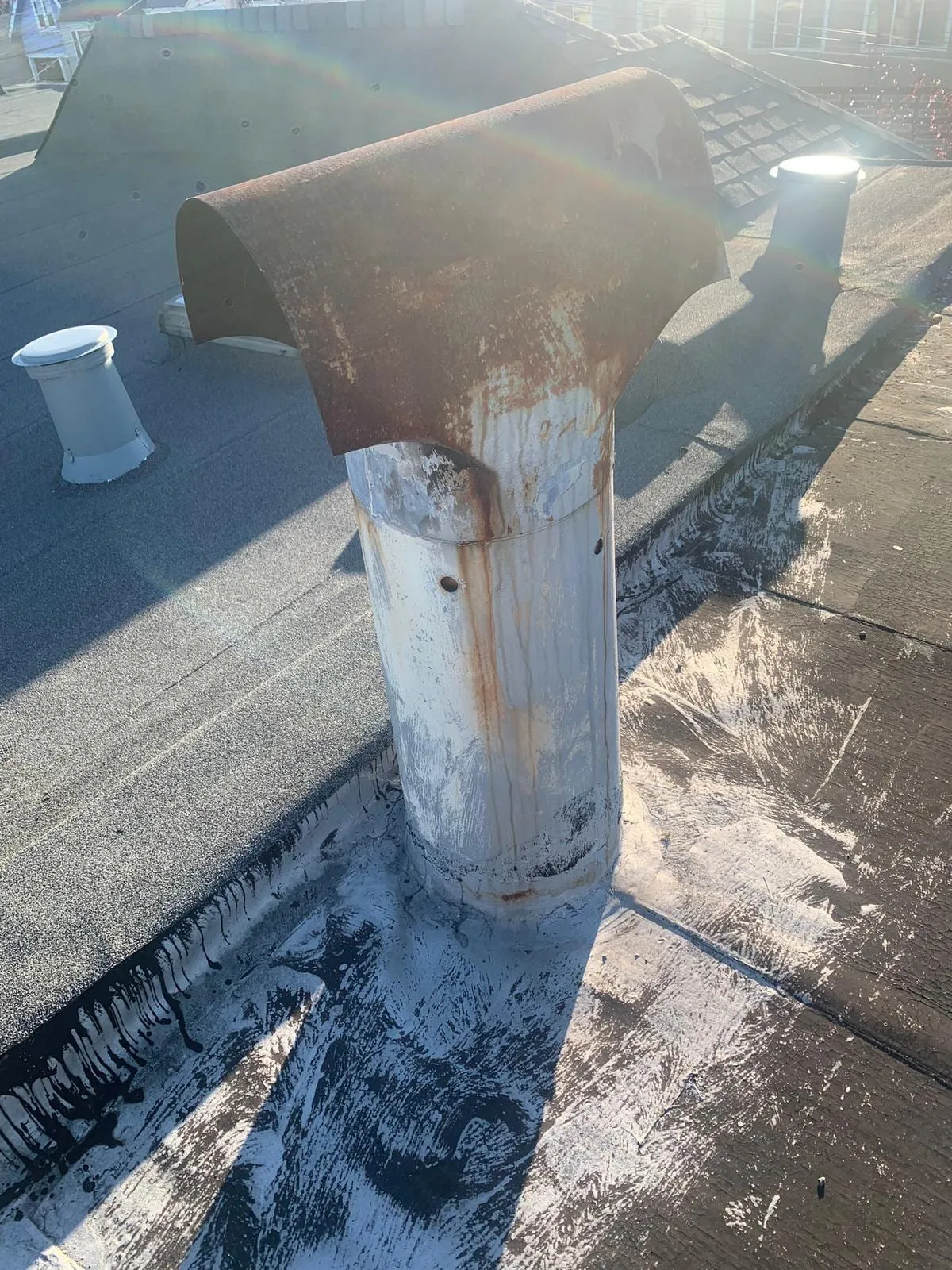
Rust on a cap after one winter — the kind of finding that has a photograph attached
5.0
59 reviews on Google
Read on
Google publishes 59; we counted the 60 the listing returned.
Friendly. Professional. Informative. Effective. Efficient.Cleared my flue effectively and without mess or drama.

There was a lot of shaking in the chimney at night because the cap had come loose. They took it out and replaced it with a safe locking model, fixed the broken tile below, cleaned up the mess, and checked the…

The formation of water stains around the fireplace was prevented by repairing the flashing. The sealing seems to be well-done and secure. At last, weatherproofing feels solid. Thorough focus on detail.
NFPA 211 calls for a Level 2 on the sale or transfer of a property, and most buyers' inspectors will say the same. It is also the version that produces a document worth handing over, because it includes the camera scan.
A Level 1 is usually under an hour. A Level 2 takes longer, because the camera scan is slow work when it is done properly — and a scan done quickly is a scan that missed something.
Yes, and those are often the most useful inspections we do. A flue that has stood idle through several New Jersey winters can have a failed crown, a washed-out joint or an animal nest in it, none of which announce themselves until the first fire.
You get the photograph and a plain explanation of what it means, including what happens if you leave it. There is no obligation to book the repair with us, and we will say so when something can reasonably wait.
Yes. Gas appliances still vent through a flue, and the flue still corrodes — often faster, because the condensate is acidic. An oversized flue serving a modern gas appliance is one of the more common findings on converted North Jersey houses.
Creosote does not announce itself. It builds in the dark, a little every fire, and the first sign most people get is smoke coming back into the room on the coldest night of the year.
Read moreThe stain on the ceiling is never where the leak is. Water travels, and a chimney gives it four separate ways in.
Read moreA chimney can be spotless and the fireplace still refuse to work. When that happens, the problem is almost always at the bottom.
Read more