

Friendly. Professional. Informative. Effective. Efficient.Cleared my flue effectively and without mess or drama.
Some ducts are dirty. Some are broken. And some were never connected to the outside of the building at all, which is the one nobody sees coming.
5.0from 59 Google reviews19 towns · open 7:00 AM–9:00 PM
The short answer
Duct repair and replacement covers the ductwork itself rather than what is inside it: sections crushed flat behind an appliance or under a joist, joints that have pulled apart inside a ceiling or crawl space, flexible runs that have sagged into a series of traps, insulation that has fallen off and left the duct sweating, and — more often than anybody expects — runs that were never connected to the outside at all and have been venting into a crawl space or an attic for years. Cleaning does not fix any of those. We repair and replace ductwork across 19 New Jersey towns, and the first thing we do is find out which of the three it is: dirty, damaged, or never right in the first place.
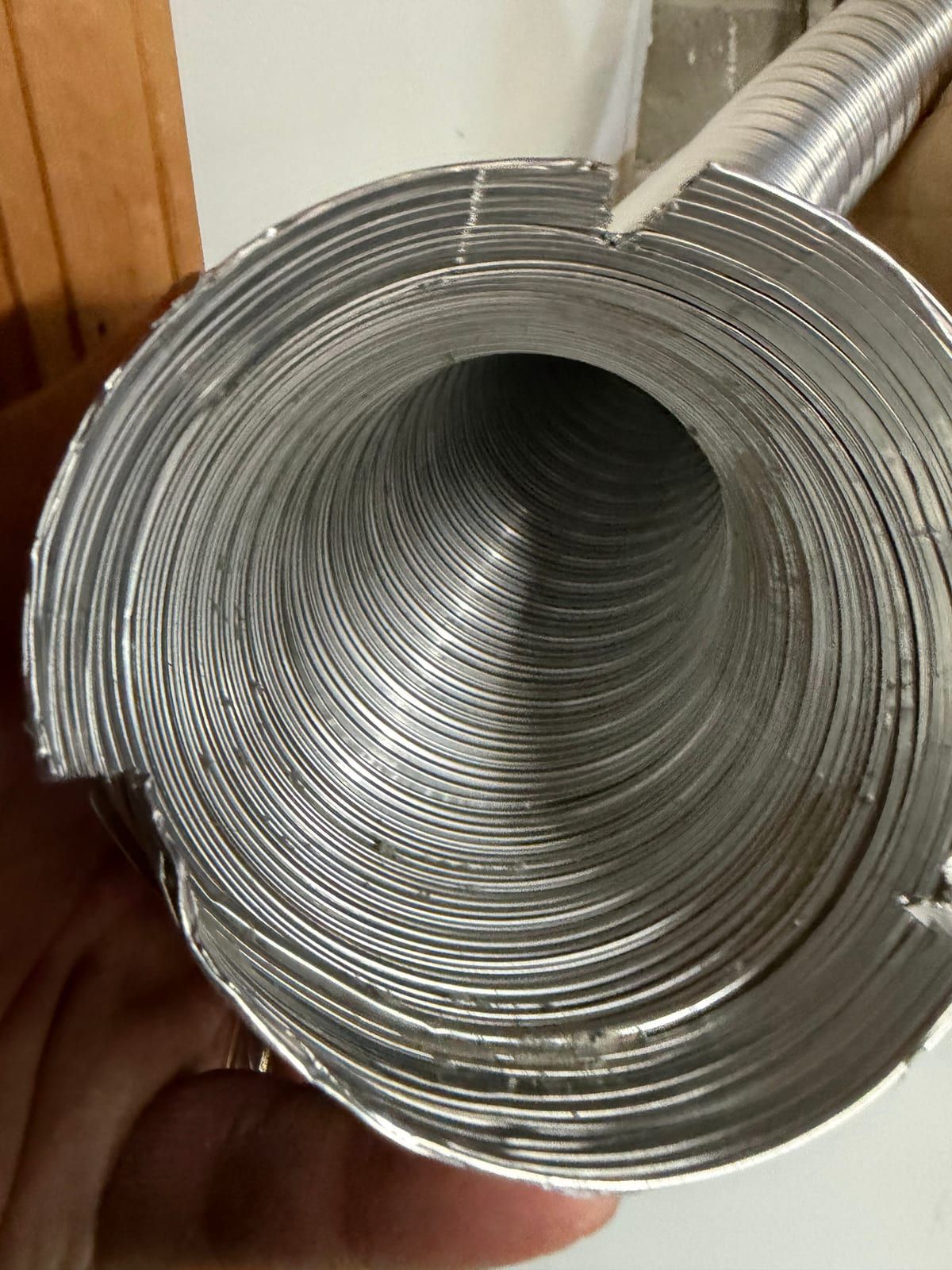
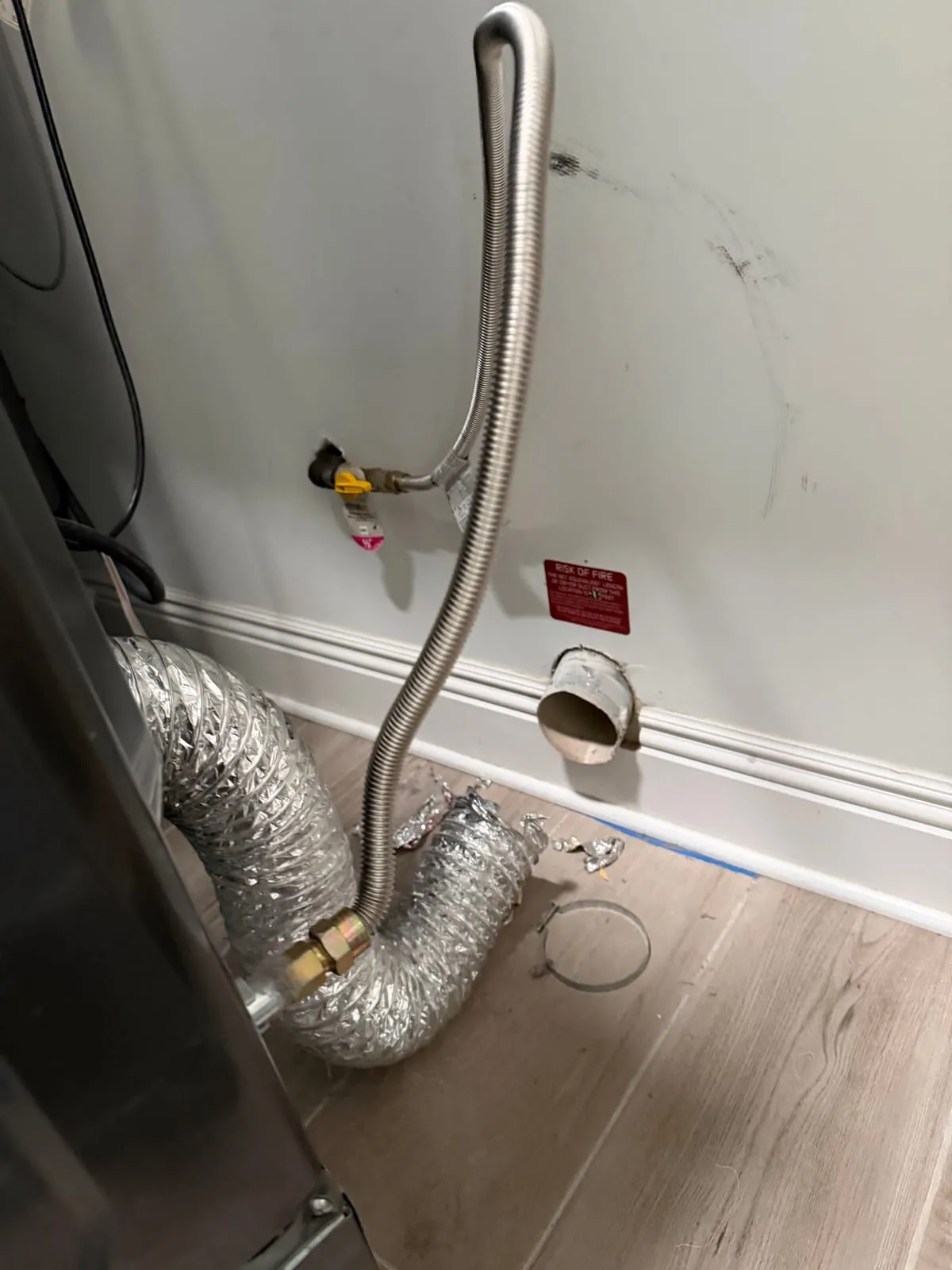
The most common damage we find is mechanical and it is usually behind something. A dryer pushed back against the wall crushes the flexible transition hose flat; a duct run under a joist takes the weight of stored boxes; a flexible run strapped too loosely sags between supports until it is a series of low points that collect condensate and lint. Each of those cuts airflow far more than dirt does, and none of them can be cleaned out. Replacing a crushed section with rigid metal, and re-supporting a sagging run so it is straight and pitched, usually restores more airflow than any amount of brushing.
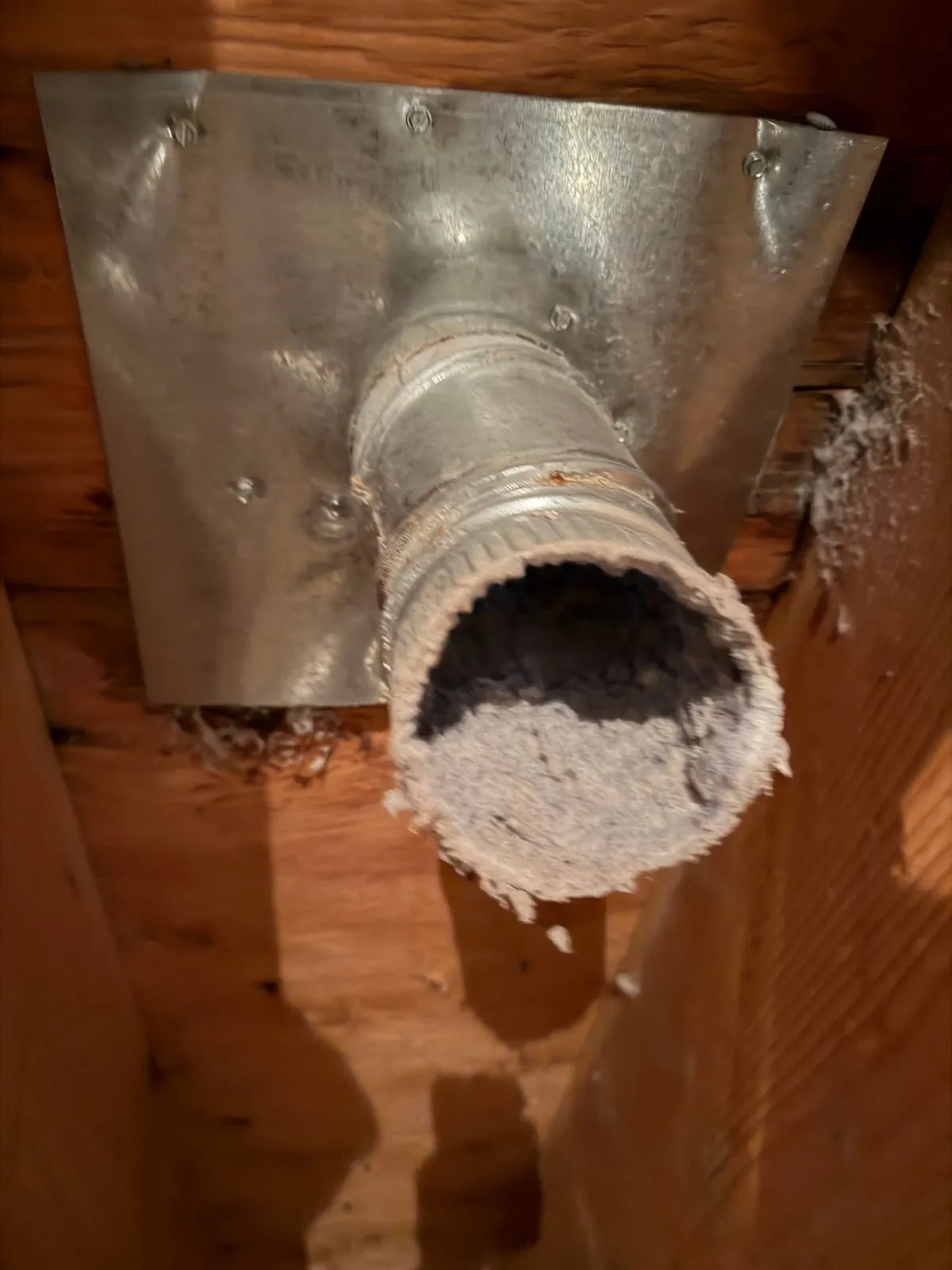
A duct that vents into a ceiling void is not a cleaning job at any price. It is a job for somebody with a ladder and a hole saw.
Ductwork joined with tape rather than mechanically fastened will eventually come apart, and when it does so inside a floor void or a crawl space nothing announces it. What you get is a room that has stopped heating properly, a system that runs longer than it used to, and — with a dryer duct — lint accumulating somewhere inside the building fabric. Finding it means following the run rather than inspecting the ends, which is why we ask about access to basements, crawl spaces and attics before we come out.
This one is rarer but it is not rare. A dryer duct terminating in a crawl space, an attic or a soffit rather than through an exterior wall puts every load's worth of warm, wet, lint-laden air into the building. The signs are a persistently damp crawl space, lint on joists or insulation nowhere near the laundry, and a smell that gets worse in summer. It is a defect of installation rather than of maintenance, and the fix is a proper termination through an exterior wall with a hood that opens. If we find this at your house, you will get a photograph of it, because it is the kind of thing that is easier to believe when you can see it.
Rigid metal duct holds its shape, resists crushing and gives lint far less to catch on. Flexible has its place — a short transition between an appliance and the wall, or a run that has to turn where rigid cannot — but as a whole run it is a maintenance problem waiting to happen. Where we replace, we use rigid for the run and keep flexible to the transition, and we fasten joints mechanically before sealing them rather than relying on tape to hold the duct together.
From their own jobs
A stub packed solid — the far end of a run that had stopped moving air
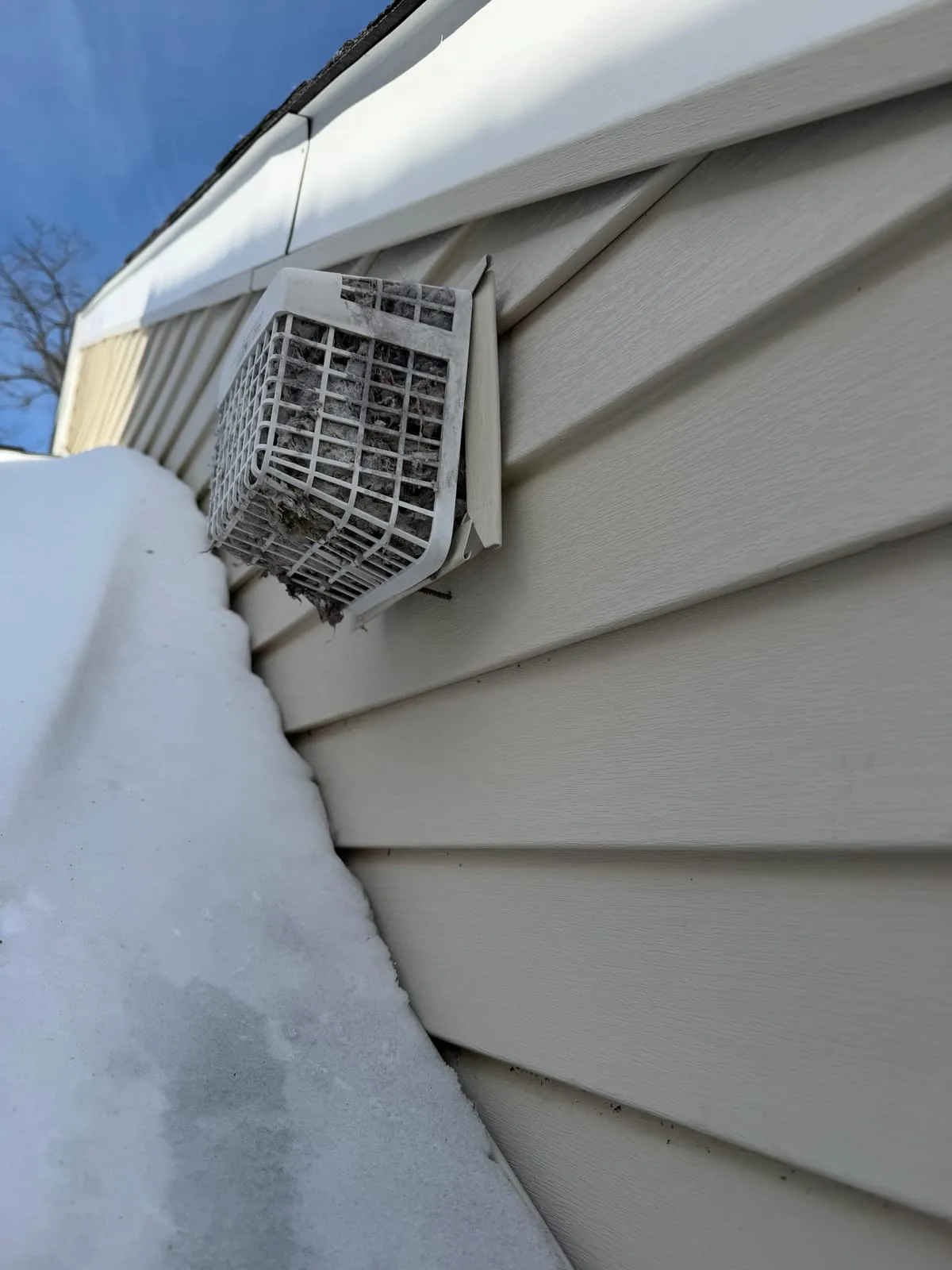
A hood that has to open under pressure, or the run backs up from the far end
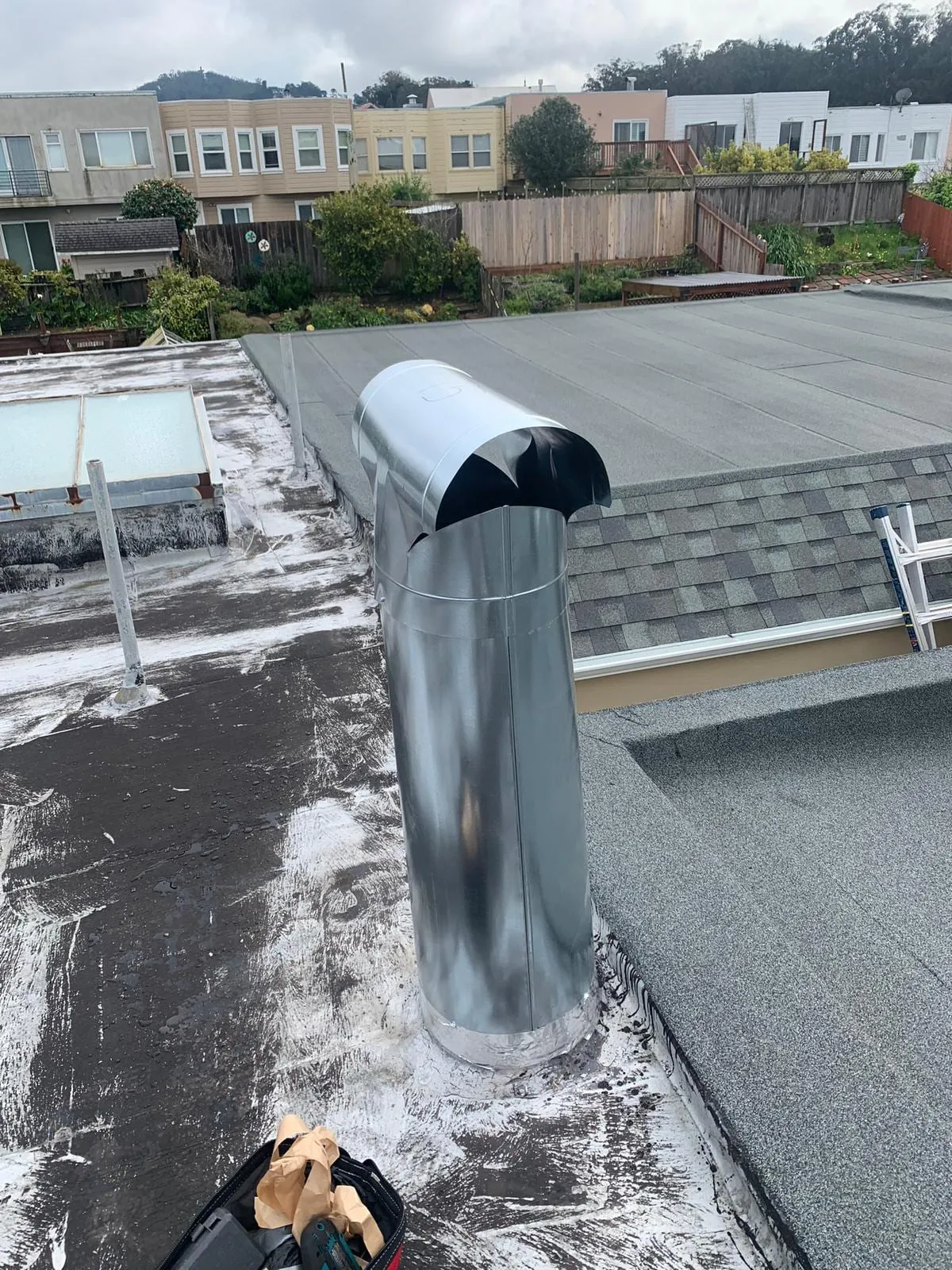
A rigid metal terminal, which is what a replacement run finishes in
The transition behind the machine, the section crushed most often
5.0
59 reviews on Google
Read on
Google publishes 59; we counted the 60 the listing returned.
Friendly. Professional. Informative. Effective. Efficient.Cleared my flue effectively and without mess or drama.

There was a lot of shaking in the chimney at night because the cap had come loose. They took it out and replaced it with a safe locking model, fixed the broken tile below, cleaned up the mess, and checked the…

The formation of water stains around the fireplace was prevented by repairing the flashing. The sealing seems to be well-done and secure. At last, weatherproofing feels solid. Thorough focus on detail.
Flexible foil that has been crushed flat does not recover its shape or its cross-section, so straightening it is a temporary answer at best. Replacing that section with rigid metal is usually a small job and it is the one that lasts.
Poor airflow that returns quickly after a cleaning is the classic sign of damage rather than dirt. So is a room that has stopped heating while the rest of the house is fine. The only way to be sure is to follow the run.
We repair and replace runs and sections, including full dryer vent runs. A complete forced-air system redesign is HVAC contractor work, and we will say so rather than take on something that needs load calculations.
A dryer must terminate outside the building. Venting into a crawl space, attic or soffit is not acceptable practice anywhere in New Jersey, and it is a moisture problem as much as a lint one.
Usually, by following the run from both ends and by what the airflow tells us. Where a run is genuinely inaccessible we will say so and set out the options rather than guess at it.
You empty the lint trap every load. The trap is not the problem. The problem is the twenty-five feet of duct behind it, which is not built to be opened by the person using the machine.
Read moreThis is the one service in our list where the right answer is often "you do not need this". We would rather say it now than take the money.
Read more